
A few years ago, I was working with a client—very smart, very experienced, great at what he did.
He had been in Toastmasters, had given a lot of presentations, and by most standards… he was a good speaker.
He was asked to present at a leadership meeting. High visibility. Important audience.
He prepared carefully. His slides were solid. His content was accurate. He delivered it well.
And afterward?
Polite nods.
A few questions.
Then the meeting moved on.
No follow-up conversations.
No one came up to him afterward.
No new opportunities came from it.
Later, he said to me:
“I don’t understand. I did everything right.”
And he did.
But here’s what we uncovered.
The Real Problem
Most people think the goal is to become a good speaker.
Clear slides.
Organized content.
Confident delivery.
And those things matter.
But they’re not what creates momentum after you speak.
Because audiences don’t just evaluate how well you presented.
They respond to three things:
- Was the message clear?
- Did I trust the speaker?
- Do I know what to do next?
If those aren’t strong, even a well-delivered presentation can fall flat.
The Shift That Changes Everything
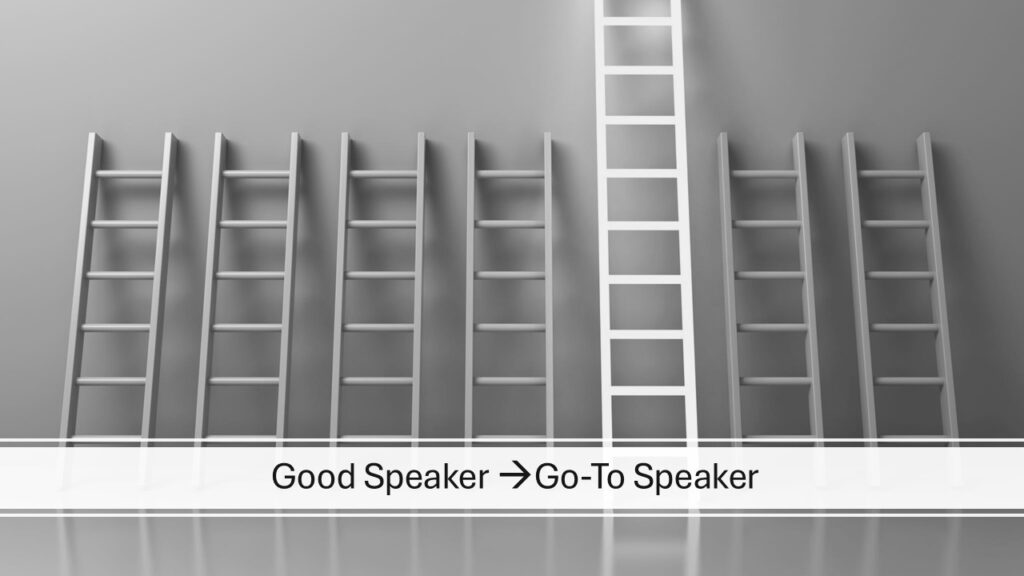
The difference between a good speaker and a go-to speaker isn’t more tips.
It’s a shift in how you think about your speaking.
Here are three shifts that make the biggest difference:
1. From Topic → Message
Good speakers focus on their topic.
Go-to speakers focus on their message.
A topic is what you’re talking about.
A message is what your audience walks away with.
Try this simple check:
Before your next talk, ask yourself:
What do I want my audience to think, feel, or do?
If you can’t answer that clearly, your audience won’t either.
2. From Delivery → Presence
Good speakers focus on delivering their content.
Go-to speakers focus on how they are perceived.
Before people evaluate your ideas, they evaluate you.
Do you sound confident?
Do you appear credible?
Do they trust you?
That judgment happens quickly—and it’s based on signals:
- your pace
- your pauses
- your stillness
- your tone
Small shifts here can dramatically change how your message is received.
3. From Practice → Platform
Good speakers treat each talk as something to get through.
Go-to speakers treat each talk as something that creates opportunities.
Before any talk, ask:
What do I want this to lead to?
A decision?
A conversation?
A follow-up opportunity?
Every talk is either practice… or positioning.
What This Means for You
If you’ve ever felt like:
“I did everything right… But nothing happened.”
You’re not alone.
And you’re not missing talent.
You may just be missing this shift.
When your message is clear, your presence builds trust, and your speaking is designed to create outcomes…
Your communication starts to carry weight.
And that’s when things start to happen after you speak.
A Simple Way to Start
Before your next presentation, ask yourself three questions:
- What do I want my audience to think, feel, or do?
- How do I want to show up (calm, confident, deliberate)?
- What do I want this to lead to?
Answer those questions, and you’ll already be operating at a different level.
I’ve been developing a new talk around this idea—how to move from being a good speaker to becoming a go-to speaker.
It’s been interesting to see how small shifts can create very different outcomes.
Curious—what’s a presentation you’ve given that didn’t lead anywhere?