
If you’ve been asked to give a wedding toast, you may be feeling honored, excited, and a little nervous. That’s normal. Most people want to say something meaningful, but they worry about rambling, freezing up, or not knowing how to organize their thoughts.
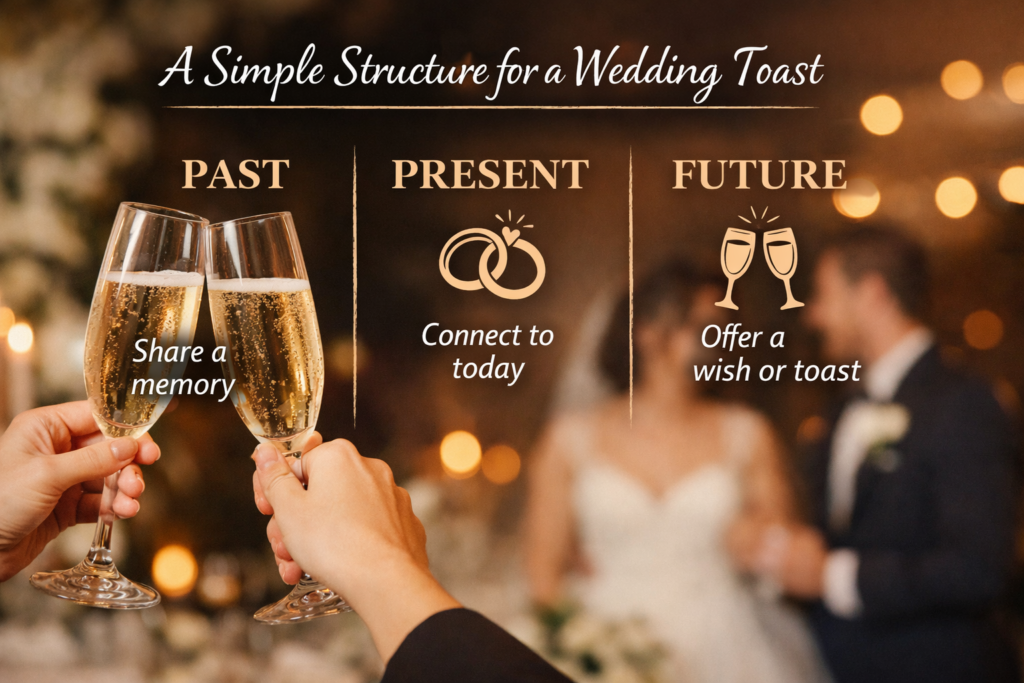
The good news is that a wedding toast does not need to be complicated to be memorable. In fact, one of the easiest and most effective ways to structure a wedding speech is to use a simple three-part format: Past, Present, Future.
This approach comes from my book, Impromptu Speaking, and it works well because it gives your speech a natural flow. It helps you share something personal, connect it to the wedding day, and end on a warm, hopeful note.
Past
Start with a short story or memory from the past. This is where you introduce yourself and explain your connection to the bride, groom, or couple.
For example:
“I’m Joe Smith, the brother of the groom, Jim.”
Then share a happy, meaningful, or lighthearted story. It does not have to be dramatic. Often, a small moment works better than a big one because it feels real and personal.
For example:
“I remember when Jim told me he wanted to marry someone who would love him exactly as he is. I had my doubts, because Jim has always been a bit of a klutz.”
That opening gives you something specific to build on. It also feels more genuine than a string of generic compliments.
Present
Next, connect that story to something happening in the present, on the wedding day itself. This is where the speech starts to feel especially alive and relevant.
A simple transition is:
“I was reminded of that story today…”
Then tie it to a moment you noticed during the ceremony or celebration.
For example:
“I was reminded of that story today when Jim tripped on the way to the altar. The difference is that this time, he fell into the arms of his bride.”
That kind of connection can create humor, warmth, and a sense that this speech belongs to this day and this couple.
Present is also a great place to say something sincere about the relationship. You might add:
“It’s clear that Janice loves Jim exactly as he is, and I think all of us can see how happy they make each other.”
Future
Finally, look ahead. End with a wish, blessing, or hopeful statement about their life together.
This gives the speech a natural emotional lift and sets up the toast.
For example:
“Here’s to a long, happy, and mostly accident-free marriage.”
Then invite everyone to raise a glass.
That final section does not need to be long. One or two heartfelt sentences are often enough.
Why this structure works
Past, Present, Future is easy to remember, which makes it especially helpful if you are nervous. It also keeps you from wandering off course. Instead of trying to think of everything you could say, you only need to focus on three simple moves:
Tell a story
Connect it to today
End with a wish for tomorrow
That gives your speech a beginning, middle, and end, and that alone makes you sound more polished and prepared.
A few tips for keeping it strong
Choose one story, not five. A short speech with one clear point is better than a long speech that tries to do too much.
Keep humor kind. Wedding toasts are not the place for embarrassing stories, private jokes, exes, or anything that could make the couple or family uncomfortable.
Be specific. Details make your speech feel authentic.
Keep it short. In most cases, two to four minutes is plenty.
End clearly. Guests should know when it is time to raise their glasses.
Final thought
You do not need to be a professional speaker to give a good wedding toast. You need a simple structure, a genuine story, and a heartfelt ending. When you focus on those three things, your speech is much more likely to feel natural, memorable, and meaningful.
If you’re preparing a wedding toast and want an easy framework, try Past, Present, Future. It is simple, effective, and easy to make your own.