
How to Start and End Your Speeches
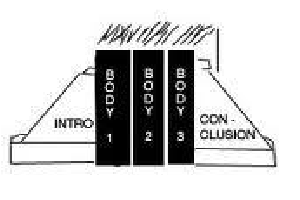
People remember best how you start and how you end! Do you know what parts of a presentation are best remembered? The interesting parts, right? Well, yes! And some parts are remembered better because of their locations in the speech. Numerous studies have shown (with lists of items) that people recall the items near the […]
13 Tips for Handling a Question and Answer Session

Do you dread the question and answer (Q&A) session? To calm your nerves and come across as a confident presenter, try these Q&A session tips at your next presentation: 1. Practice responses to questions that you think might be asked. Role play questions. 2. Plant a question or two in the audience before you start. […]
What to Do When You Blank Out During a Speech
Two-hundred pairs of eyeballs were on me. I had just delivered a dramatic, beautifully wordsmithed phrase in my contest speech. Then my mind went blank. I looked at the audience with the “deer-in-the-headlights” stare for what seemed like an eternity as my mind frantically groped for the next phrase. Has that ever happened to you? […]
How to Self-Evaluate Your Speech
Do you want to greatly improve your presentations? I could just say, “hire me,” but you can improve your presentations all on your own, too. You can self-evaluate. A good self-evaluation is a journey of awareness. A great self-evaluation is one that starts with preparation and planning well before you give your speech. To prepare […]
How to Write a Speech in 5 Minutes
You show up at an event and the organizer asks you to “say a few words” later in the program. That happened to me last month–in front of a few hundred people. You arrive at your Toastmaster meeting and a speaker didn’t show up, so the Toastmaster asks if you would like to take the […]
Master the Metaphor
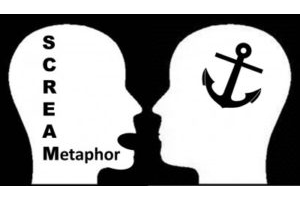
“The greatest thing by far is to be a master of metaphor.” –Aristotle Metaphor is the last rhetorical device in the acronym SCREAM (Simile, Contrast, Rhyme, Echo, Alliteration, and Metaphor). Metaphor is the comparison of two UNLIKE things without using the word “like” as in a simile. In a previous post, I briefly explained the […]
Polished Presenters Use Awesome Alliteration
Mickey Mouse, Donald Duck, Bugs Bunny, Fred Flintstone, SpongeBob Squarepants. All cartoon characters. All examples of alliteration. Alliteration is the repetition of the same sound at the beginning of nearby words. It is the fifth rhetorical device in the acronym SCREAM (Simile, Contrast, Rhyme, Echo, Alliteration, and Metaphor). Use the techniques of SCREAM to capture […]
The Echo Technique in Presentations

You may have heard people say that giving a speech is simple: Tell them what you’re going to tell them. Then tell them. Then tell them what you told them. That’s one basic, boring use of repetition. A more exciting use of repetition is the echo technique. Echo is the repetition of a word or […]
Prime Your Audience with Rhyme!
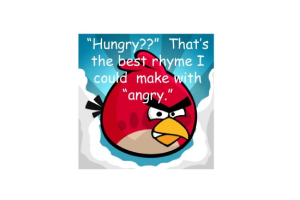
Rhyme builds rhythm, momentum and memory. Rhyme is the third rhetorical device in the acronym SCREAM (Simile, Contrast, Rhyme, Echo, Alliteration, and Metaphor). Use the techniques of SCREAM to capture your audience’s attention with colorful language and anchor your points the minds of your audience members. Short rhymes can be very effective in foundational phrases […]
Using Contrast in Presentations

What if in Shakespeare’s play, Hamlet had said, “I wonder if I should kill myself?” Nobody would have remembered it. Instead, Hamlet says, “To be or not to be, that is the question.” Shakespeare knew the secret power of contrast. Contrast is the second rhetorical device in the acronym SCREAM (Simile, Contrast, Rhyme, Echo, Alliteration, […]